
Face Frame vs. Frameless Cabinets: Kitchen Cabinet Construction Explained


Most people shop cabinets by door style and color first. That’s normal. You’re going to see those doors every day, and it’s easy to picture the finished kitchen when you’ve got a color sample in your hand.
But the stuff you don’t see at first is what you feel later, every time you load the dishwasher, reach for a pan, or try to pull a trash can out without bumping the door. If you’re comparing face frame vs. frameless cabinets, you’re really deciding how the cabinet box is built, and that choice affects storage access, door alignment, and how the installation handles real-world walls and floors.
The two main cabinet constructions are face frame (also called framed) and frameless (often called European-style). Neither is automatically “better.” The right choice depends on how you use your kitchen, what look you’re after, and how your home is built.
Face frame vs. frameless: the simple difference
Framed cabinets have a solid wood frame attached to the front of the cabinet box. That frame creates the cabinet opening, and doors and hinges mount to it. If you’ve ever noticed a defined border around the opening when doors are open, that’s the face frame.
Frameless cabinets skip that front frame. Doors and hinges mount directly to the cabinet box sides, and the opening is basically the full width of the box. That’s why frameless cabinets often feel a bit more open when you’re loading dishes or sliding a trash pull-out in and out.
What changes for storage and access
This is where the difference shows up in day-to-day use. Frameless cabinets typically provide wider access because there’s no face frame narrowing the opening. On paper, that might sound like a small detail. In real kitchens, it matters most in tight spots.
A few examples where homeowners actually notice it:
Narrow base cabinets (12-inch and 15-inch bases) where every fraction of an inch helps
Pull-out trash systems that benefit from cleaner clearance
Deep drawer stacks for pots, pans, and small appliances
Roll-outs and organizers that need smooth access in and out
Framed cabinets can absolutely be designed to store a lot and function well. But the face frame does create a slightly smaller opening, and that can influence which accessories fit best and how easily you can reach items in the back.
Drawers are the other big one. Frameless construction often allows slightly wider drawers in the same run, which can shift the whole feel of a kitchen. Wide drawers are one of those upgrades that people appreciate every day because they’re simpler to use than door-and-shelf bases.
What changes visually
Cabinet construction affects the architecture behind the doors, and that changes the look even when the door style is similar.
Framed cabinets pair naturally with traditional details and certain door styles, especially inset. With inset doors, the door sits flush inside the face frame opening. It creates a clean, furniture-like look with crisp shadow lines that feels intentional and classic.
Frameless cabinets lean more modern because they’re commonly built around full overlay doors. Full overlay means the doors cover most of the cabinet box edge, leaving tight, consistent reveals between doors and drawers. The result is a more seamless look across long cabinet runs, especially in contemporary kitchens or in clean Shaker designs.
You can do Shaker doors with either style. The difference is how “framed” the whole kitchen feels once the doors are closed. Frameless tends to read as more continuous and streamlined. Framed tends to feel a little more furniture-like, even in a simple door style.
Real-world examples: framed vs. frameless
If you want a quick visual reference, here are two real examples of how each construction style shows up in finished work. When you compare them, look at the spacing between doors and drawers, the size of the cabinet openings, and how cleanly the lines carry across a full run.
Framed cabinet example (face frame):
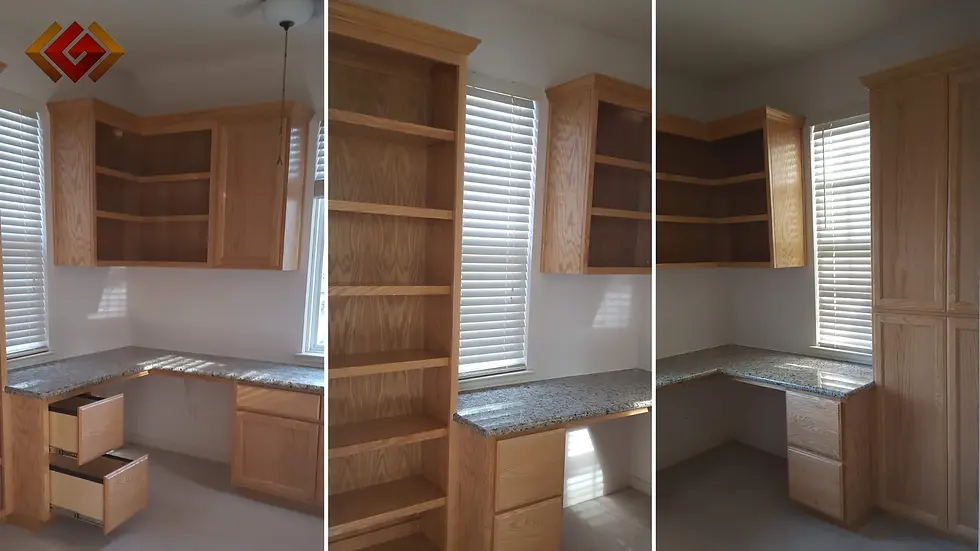
Frameless cabinet example (European-style):

From IKEA to custom! This kitchen got a face-lift with these beautiful
black frameless custom cabinets.
Strength and durability: what actually matters
t’s tempting to assume framed cabinets are stronger because you can see the wood frame. In reality, both styles can be extremely durable. What determines longevity is more about the box material, how it’s assembled, and the quality of the hardware.
With framed cabinets, the face frame does add stiffness at the front of the box, and that can feel very solid, especially on larger cabinet openings.
With frameless cabinets, the strength is in the box itself. A well-built frameless cabinet is not flimsy. When you’re comparing options, the questions that matter are practical:
What is the cabinet box made from?
How thick are the panels?
How are the boxes assembled and fastened?
What hinges and drawer slides are used, and what are they rated for?

If you want cabinets that hold up for the long haul, put your attention on those details. A great finish and good hardware will outlive trend cycles regardless of framed or frameless.
What changes during installation
Cabinets don’t get installed in a perfect showroom. They get installed in real houses, and real houses have floors that dip, walls that bow, and corners that are not perfectly square.
Frameless cabinets tend to demand tighter alignment because the reveals between doors and drawers are usually smaller and more consistent. A skilled installer will level and shim carefully, keep cabinet faces in the same plane, and dial in the doors so everything lines up cleanly. When it’s done right, frameless cabinetry looks crisp and intentional.
Framed cabinets can be a bit more forgiving in older homes. The face frame and trim details can help manage slight variations, and there’s often more flexibility in how certain fillers and scribe pieces are handled. That doesn’t mean framed is easier; it just means it can hide minor inconsistencies a little better.
Either style can install beautifully. The difference is how much the cabinet design highlights the room conditions.
Is one more expensive than the other?
Not always. Cost depends more on the full cabinet spec than on the presence of a face frame.
That said, there is a pricing pattern that shows up often enough to be useful when you’re comparing quotes. In prefab cabinet lines, face frame construction is often less expensive than frameless. In custom cabinetry, face frame can be more expensive than frameless, especially when the job includes furniture-style detailing, inset options, or more labor-intensive face frame work.
That does not make it a hard rule across every cabinet line. Finish level, storage accessories, trim work, and installation scope still play a big role in the final price. But it’s a good question to bring up early, especially if you’re comparing prefab options against custom work.
In many projects, the budget moves more because of:
the cabinet line and available construction options
door style and finish (paint, stain, specialty colors)
storage upgrades (trash pull-outs, drawer organizers, roll-outs)
trim work and installation scope
If you’re choosing between face frame and frameless and trying to stay on budget, it’s often smarter to decide based on function and style preference first, then adjust accessories or finish options if needed.
A practical way to decide
If you like a classic, furniture-inspired kitchen, want inset doors, or prefer traditional detail, framed cabinets are usually the most straightforward fit.
If you want maximum access, prefer a cleaner modern look, or plan to use a lot of drawers and pull-outs, frameless cabinets are often a great match.
The best kitchens come from good planning: a layout that fits how you cook, storage that matches your routine, and cabinet construction and hardware that are built to hold up.
Common questions we hear
Do frameless cabinets give you more storage?They often give you more usable access because the openings are wider. That can be especially noticeable on narrow cabinets and pull-outs.
Are frameless cabinets lower quality?They can be if they’re built with lower-grade materials. A well-built frameless cabinet with quality hardware is very durable.
Can you inset doors with frameless cabinets?Inset is most commonly paired with framed cabinets. Some systems can do inset in frameless, but it’s less common and more specialized.
Which is better for a small kitchen?Frameless often wins on access and drawer width, but a smart layout and the right storage accessories matter more than the box style alone.
If you’re on the fence, it helps to look at both constructions with real samples and talk through how you want drawers, trash, pantry storage, and corner solutions to work. Contact GG&G Cabinets to schedule an estimate and design consult.
Key takeaways
Face frame cabinets add a wood frame at the front, which supports classic looks like inset and can be a bit more forgiving in older homes.
Frameless cabinets skip the face frame, which typically means wider openings and easier access for drawers and pull-outs.
Storage differences show up most on narrow bases, trash pull-outs, and deep drawer stacks.
The look is tied to overlay: face frame often pairs with inset or partial overlay, while frameless commonly uses full overlay for tighter, modern reveals.
Durability depends more on the box build and hardware than on face frame vs. frameless alone.
Installation precision matters for both, but frameless tends to show alignment and reveal consistency more clearly.
Cost is usually driven by finishes, accessories, and installation scope, not just the construction style. In many prefab lines, face frame is often less expensive than frameless, while in custom work face frame can price higher depending on detailing and build approach.


